
Black coffee drinks contain no added milk. Ristretto, espresso and lungo differ mainly in the length of extraction. An Americano is commonly made by adding hot water to espresso; a long black pours espresso over hot water.
What is the difference between these black coffees?
| Drink | How it is made |
|---|---|
| Ristretto | A shorter espresso extraction. |
| Espresso | Water passes through finely ground coffee under pressure. |
| Lungo | A longer extraction through the coffee grounds. |
| Americano | Hot water is added to espresso. |
| Long black | Espresso is poured over hot water. |
- Ristretto
- Espresso
- Lungo
- Café Americano
- Long Black
- Café Macchiato
- Flat White
- Cortado
- Cappuccino
- Café Latte
How do ristretto, espresso and lungo differ?
We’ll look at these together given they are variations on the same theme – namely an espresso shot with different amount of water to extract the solubles.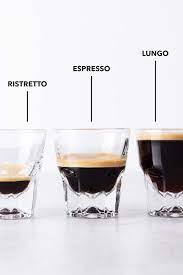 A ristretto, which is derived from the Italian word for “restricted” uses the same amount of ground coffee as an espresso, but only half the water. Many baristas will use a finer grind that that used for an espresso and so, it is technically incorrect to call it a concentrated espresso shot.
The flavour profile also differs because the amount of water moving through the grounds is less and so extraction of compounds that might occur with 60 ml of water through 14g of ground coffee for a double espresso, does not occur with 30ml of water through the same coffee grammage. One of the more interesting compounds that is not extracted to the same extent in a ristretto when compared to an espresso, is caffeine.
Espresso is typically made with 7g of ground coffee with 30ml of water and a double espresso requires 14g of ground coffee with about 60ml of water passing through the grounds under pressure. A characteristic of good espresso blends is the formation of “crema” on the surface. This is formed by tiny bubbles of CO2 that are released into the extracted liquid through the use of heat and pressure in the process that characterises espresso extraction.
The lungo is a “longer” drink and is typically around 3 times the volume of the espresso. When made with 14g of ground coffee, a lungo would then offer around 120ml of extracted coffee (with thanks to coffeeatthree.com for the photo above).
What is the difference between an Americano and a long black?
An Americano adds hot water to an espresso shot. A long black starts with hot water in the cup, then adds espresso. This order usually helps preserve more of the crema in a long black. A lungo differs from both because its extra water passes through the grounds during extraction.
Recipes and serving sizes vary between cafés. The preparation order above follows De’Longhi’s coffee-delivery instructions.
So now you know your black coffee choices and what makes them unique. You can purchase your espresso beans on our coffee page.It’s time to move on to Part 2 to look at the coffee varieties that have added milk.Choose beans for black coffee at home
Shop coffee beans or view the Mugg & Bean Espresso Blend. Check current price and availability, then adjust your grind and recipe for your machine. Free delivery applies to orders over R450.